
SOA Category OG2
Qualification for the restoration and maintenance of protected cultural properties
The SOA OG2 category covers the restoration and maintenance of protected real estate, such as historic buildings, museums and other buildings of cultural interest. Working on this heritage requires specific skills, documented experience and suitably qualified technical management.
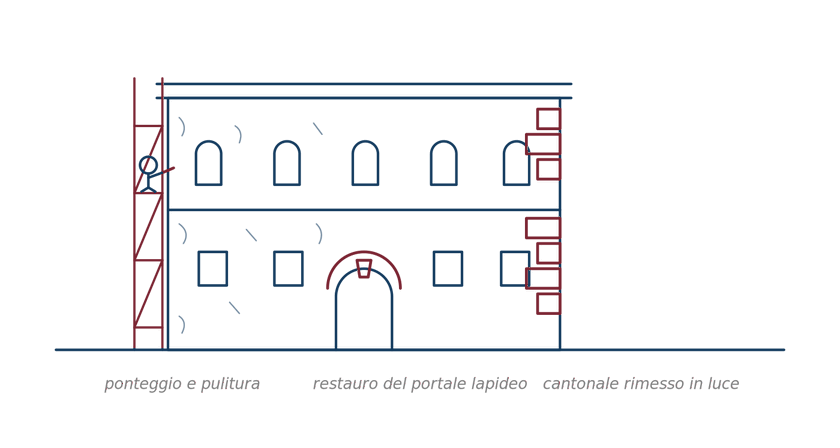

OG2 category requirements
-
Completed works
The total value must be at least 70% of the requested classification. Several projects may be combined. No peak-work requirement applies.
The works must fall within category OG2 and be documented. Works carried out directly as a subcontractor may be assessed for the company that performed them.
-
Technical management
Technical management must be suitably qualified and may be provided by the owner of the company.
An architect registered in Section A of the professional register or a holder of a master’s degree in Conservation of Cultural Heritage.
At least two years of experience in works on cultural heritage must be documented. Individuals who were already technical directors on 1 March 2000 may retain their position, subject to the conditions laid down by the applicable rules.
-
CEL and successful completion
CELs for public or private works, issued by the client and the works director, must include the approval of the Soprintendenza, the authority responsible for protecting the asset, confirming the successful completion of the works.
The documentation must make it possible to establish the works carried out, their value and the contractor. Confirmation from the heritage protection authority is also essential for private works.
-
Continuity of experience
The use of CELs without a time limit is subject to conditions.
Continuity in carrying out works in the sector;
or retention of the same technical management.
A change of technical director does not automatically make all previous works unusable: the qualification route applicable to the company must be assessed.
-
Nature of the asset
The works must concern a property protected as a cultural asset. A landscape protection designation alone is not sufficient for works to fall within category OG2.
Recovery, restoration, consolidation and maintenance must be assessed in relation to the asset and the works actually carried out.
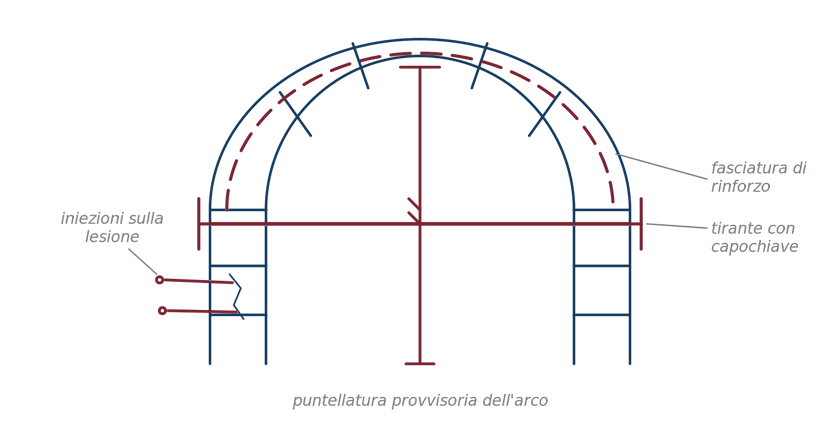
FAQ SOA Category OG2
What is the official “declaratory” of OG2?
Declaratory (official text): OG2 involves a coordinated set of specialist activities required to restore, preserve, consolidate, transform, refurbish, repair, or maintain buildings protected under cultural heritage and environmental legislation. It also includes the installation of electromechanical, electrical, telephone, and electronic systems, as well as any type of finish, connected works, complementary elements, and accessory works.
Can subcontracted works be used for OG2 or OS2A/B qualification?
YES, if the company directly performed the specialized restoration work. NO, if the company was the main contractor but subcontracted the works to others.
Can works on private cultural properties be used for OG2/OS2A/B/OS25?
YES, if the asset is protected under Part II of Legislative Decree 42/2004 and the work was authorized and supervised by the Soprintendenza. Works on properties with only landscape protection (Part III of D.Lgs. 42/2004) are NOT valid.
CELs must include confirmation of proper execution issued by the authority responsible for the asset.
Can multiple small-value works be combined to meet the 70% requirement?
YES. OG2 allows aggregation of works until the required 70% threshold is reached. No peak-work requirement applies.
Do CELs for cultural heritage categories have unlimited validity?
YES, but only if:
- The company maintains continuous activity in OG2/OS2A/OS2B/OS25, OR;
- The Technical Director remains unchanged.
Does the Technical Director’s retirement result in loss of qualification?
NO, provided a suitable replacement is appointed. If the retired TD continues with a professional services contract, they may retain the role. Timely notification to the SOA is required.
If I change Technical Director, do my CELs become invalid?
As long as the works were performed by the company, CELs remain valid within the 15-year assessment period.
Can the Technical Director be changed during SOA renewal?
YES, as long as the new TD is formally appointed before the new certification is issued and the SOA verifies their qualifications and experience.
Must CELs always include Soprintendenza approval?
YES. Without formal approval confirming proper execution, CELs are not valid for SOA purposes.
Can a company request OG2 and OS2A/OS2B at the same time?
Are OG2, OS2A/OS2B, and OS25 classifications cumulative?
NO. Each cultural heritage category is independent. SOAs must issue certifications separately for each category.
Can a company obtain OG2 without an architect as Technical Director?
YES, if the TD holds a master’s degree in Cultural Heritage Conservation. It is also possible for professionals who served before 1 March 2000 to maintain the role.
Do simple maintenance works (cleaning, minor repairs) count toward OG2?
YES, but only if performed on protected assets under Soprintendenza supervision and accompanied by a CEL confirming proper execution. Ordinary, non-protected works do NOT count.
If an OG2 business unit is transferred, can the acquiring company maintain OG2?
YES, but only if the Technical Director is also transferred and remains with the acquiring company for at least 3 years.
OG2 is the core of architectural restoration: protection, methodology, and full documentation traceability. It requires a qualified Technical Director, CELs approved by the Soprintendenza, and demonstrable experience—making it a competitive asset for companies working on Italy’s most delicate cultural heritage sites.
For companies, it is a competitive advantage on the most sensitive cultural heritage projects.