How can participation in European public procurement be simplified while ensuring the reliability of economic operators and the quality of works? This was one of the central questions at CQOP SOA’s Academy Day, held on 29 October 2026 at the CEOforLIFE Clubhouse in Piazza Montecitorio, Rome, with participants attending in person and online.
Representatives of national and European institutions, universities, associations and the professions discussed the single market, the digitalisation of public procurement and the future of qualification. The event centred on research promoted by CQOP SOA and the contribution that Italy’s SOA qualification system can make to the European debate.
Public procurement and European competitiveness
The event, entitled “From the single market for public procurement to a single European qualification?”, examined the prospects for European public procurement reform and its practical implications for businesses and contracting authorities.
In his opening video message, Raffaele Fitto, Executive Vice-President of the European Commission, highlighted the role of public procurement in supporting investment, growth and competitiveness. He focused on reducing duplication of documentation, improving interoperability between platforms and reusing information that demonstrates compliance with participation requirements.
Stefano Verrecchia, Head of the Department for European Affairs of the Presidency of the Council of Ministers, discussed the European negotiations and the importance of drawing on national experience in the harmonisation process. The qualification of economic operators emerged as an area in which Italy can contribute its experience.
Research on the qualification of economic operators
The research session focused on the study “Completing the puzzle of the European public procurement reform: towards a European system for the qualification of economic operators?”, presented by Desiderio Berdini and Francesco Nicoli.
The study examines the obstacles businesses face when bidding across borders, highlighting three priorities: improving access to information, facilitating recognition of certifications and reducing the time needed to verify compliance with requirements. Nicoli outlined a gradual approach:
- strengthen the legal recognition of documents;
- make technical requirements more comparable;
- encourage convergence between national systems.
The aim is a more accessible European market, particularly for businesses with limited resources to navigate procedures that differ from country to country.
Read the researchReliable data for digital procurement and AI
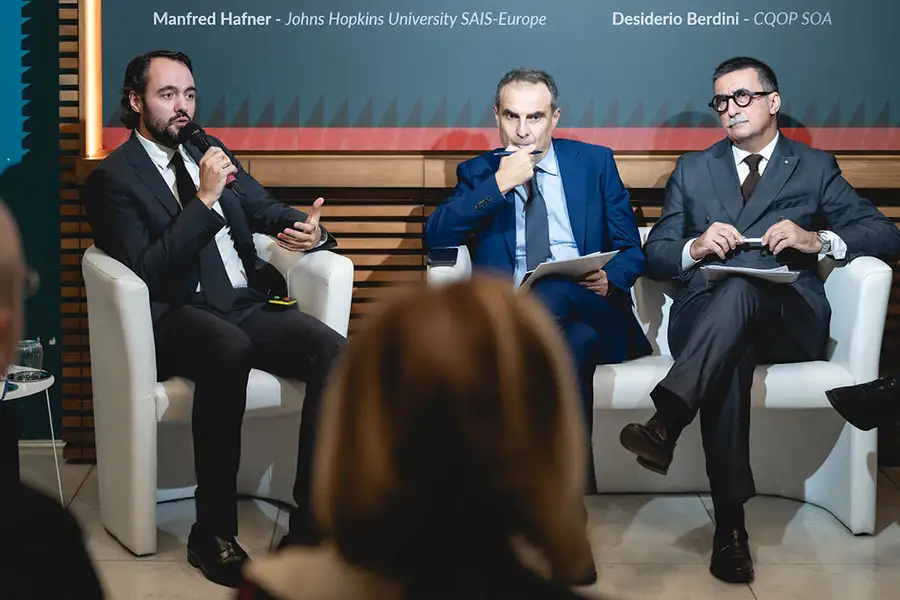
In his introductory remarks, Berdini highlighted the connection between digitalisation, artificial intelligence and qualification. Making documents available digitally is an important step, but their origin, meaning and validity must also be verified, together with compliance with the requirements established by national law.
Across a European market with different regulations and administrative practices, reliable and comparable information helps contracting authorities make informed decisions. Verification gives that information its value by establishing what the supporting documents demonstrate and whether the applicable requirements are met.
Berdini therefore proposed taking the Italian SOA qualification model as a starting point, bringing its underlying principles and accumulated expertise into the European debate and assessing how they could apply in a broader context.
Quality of works and market access
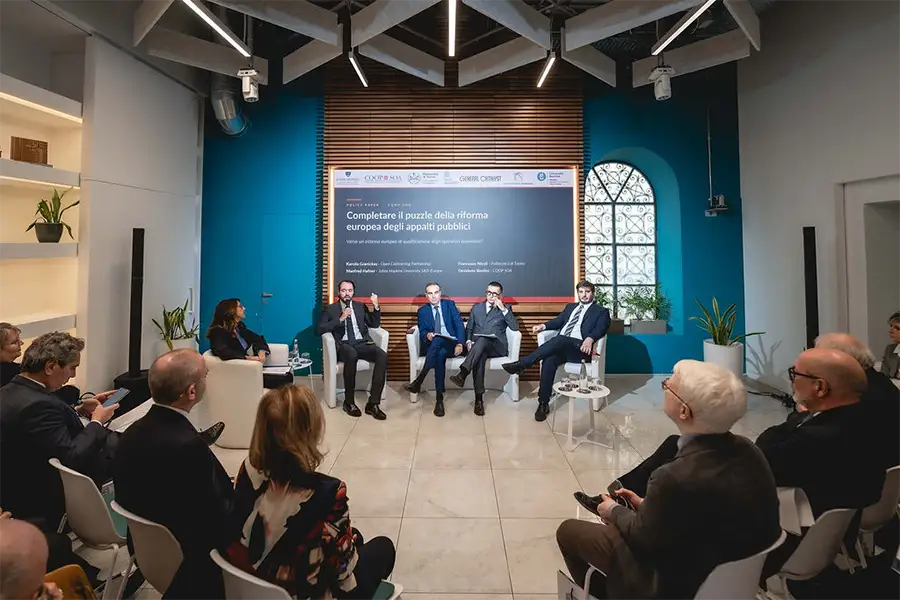
The round tables, moderated by Lucilla Deleo (L.D Public Affairs Expertise), explored the practical implications of reform for public administrations and businesses. Speakers included Erica Mazzetti, Denis Nesci, Agostino Santillo, Giuseppe Fabrizio Maiellaro, Marco Lombardo and Alessandro Colucci, with a video message from Brando Benifei.
The discussions highlighted the need to combine simplification with an assessment of businesses’ actual capacity to carry out works. Alongside financial strength, this requires attention to organisational capacity, technical expertise, available resources and adaptation to technological and environmental change.
Paolo Caracciolo offered the perspective of local authorities, emphasising the importance of capable administrations and businesses equipped to deliver projects. Francesca Ottavi, representing ANCE, stressed the value of the Italian qualification system for the future European framework. Francesca Levato focused on worker safety and effective construction site organisation. The legal contributions examined the relationship between European integration, legal certainty and the distinctive features of national systems.
Contributing to European public procurement reform
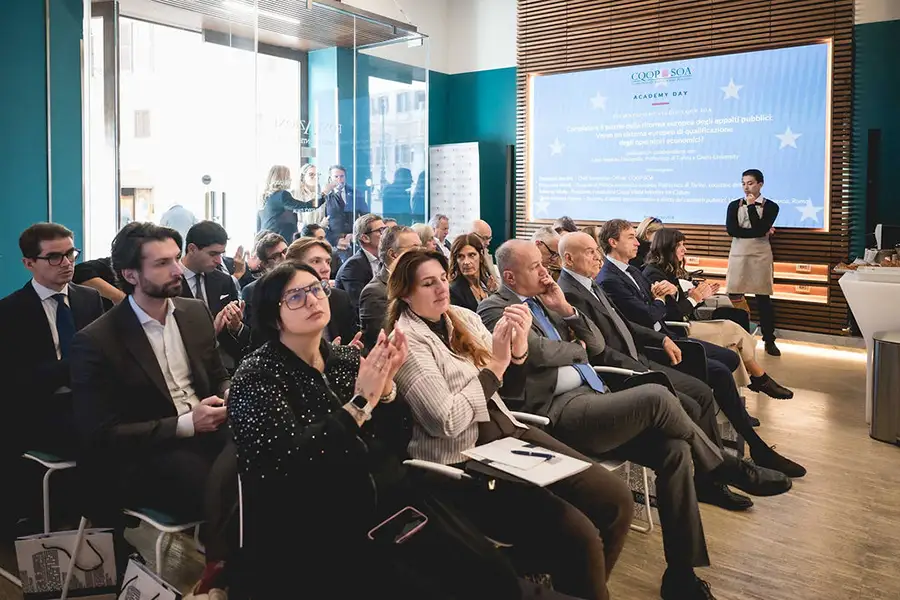
A recurring question throughout the day was how to reduce administrative burdens while maintaining effective checks and ensuring that works are carried out properly. A European qualification system was discussed as a direction to explore, with its design and implementation still to be defined.
Through the Academy Day, CQOP SOA brought researchers, institutions and economic operators together to contribute to this debate. For businesses, understanding how the European market is evolving helps them prepare for new opportunities. For public administrations, it supports the development of the tools and expertise needed to turn investment into well-executed projects.